- PXI & VXI Systems On Sale
- sku: 121335426202533
- LITEPOINT Z5211
Z5211 LITEPOINT Pxie Arbitrary Waveform Generator Bit
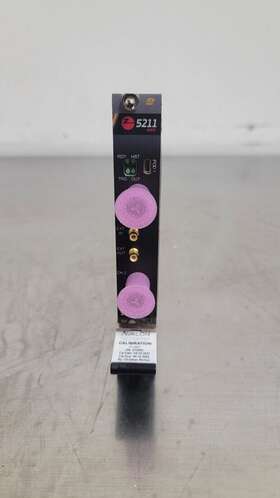
| Brand | LITEPOINT |
|---|---|
| Manufacturer Part Number | Z5211 |
| Part Type | BIT GENERATOR |
| Module Function | ARBITRARY WAVEFORM GENERATOR |
Review LITEPOINT Pxie Arbitrary Waveform Generator 200mb/s Bit
The LitePoint Z5211 PXIe Arbitrary Waveform Generator is a powerful and versatile instrument designed for high-speed, high-precision signal generation applications. This device is equipped with a 14-bit resolution, which ensures exceptional accuracy and dynamic range, making it ideal for complex signal generation tasks.
The Z5211 has a maximum bandwidth of 200 MHz, allowing it to generate and manipulate signals with high-frequency content. This is particularly useful in applications such as RF testing, where the ability to generate and analyze high-frequency signals is critical.
The device features a 128 ms maximum output time, providing ample time to generate long and complex waveforms. This is accompanied by a large memory capacity, which allows for the storage and playback of multiple waveforms.
The Z5211 is a PXIe (PXI Express) instrument, which means it is designed to work within the PXI (Peripheral Component Interconnect) system. This allows it to integrate seamlessly with other PXI instruments, creating a powerful and flexible test and measurement system.
The device also includes a variety of built-in functions, such as waveform editing, math functions, and triggering capabilities. These features allow for the creation of complex waveforms and the ability to synchronize signal generation with other devices.
In summary, the LitePoint Z5211 PXIe Arbitrary Waveform Generator is a powerful and versatile instrument designed for high-speed, high-precision signal generation applications. Its 14-bit resolution, 200 MHz bandwidth, and 128 ms maximum output time make it an ideal choice for RF testing and other complex signal generation tasks. Its integration with the PXI system and its built-in functions make it a valuable addition to any test and measurement system.
Pros of buying LitePoint Z5211 PXIe Arbitrary Waveform Generator:1. High bandwidth: The LitePoint Z5211 offers a bandwidth of 200 MHz, which is suitable for a wide range of applications requiring high-speed signals.
2. High resolution: With a 14-bit resolution, this waveform generator can produce very high-quality waveforms with a high degree of accuracy.
3. Large memory: The 128 ms memory capacity allows for long waveform sequences to be generated without the need for continuous data streaming.
4. PXIe interface: The PXIe (PXI Express) interface is a high-performance, compact, and expandable interface that can be easily integrated into a larger system.
5. Compatibility: The LitePoint Z5211 is compatible with popular test automation software, such as Agilent's ADS and LabVIEW, making it easy to integrate into existing test systems.
Cons of buying LitePoint Z5211 PXIe Arbitrary Waveform Generator:1. High cost: The LitePoint Z5211 is a high-end, professional-grade waveform generator, and its cost reflects its advanced features and capabilities.
2. Requires specialized knowledge: To fully utilize the capabilities of the LitePoint Z5211, a user needs to have a deep understanding of digital signal processing and waveform generation.
3. Limited portability: The PXIe interface is not as portable as other interfaces, such as USB, and the device itself is not a standalone unit. It requires a PXI chassis to operate.
Conclusion:The LitePoint Z5211 PXIe Arbitrary Waveform Generator is a high-performance, high-resolution, and flexible waveform generator that is well-suited for a wide range of applications. Its high bandwidth, large memory, and compatibility with popular test automation software make it an excellent choice for professionals in the field of signal generation and measurement. However, its high cost and specialized knowledge requirements may make it prohibitive for some users.
Recommendation:If you have a need for a high-performance waveform generator with advanced features and capabilities, the LitePoint Z5211 is a great choice. However, if cost is a concern or if you don't have the necessary technical expertise, you may want to consider other options with lower bandwidth, resolution, or memory capacity, such as lower-end waveform generators or software-defined signal generators. Ultimately, the best choice for you depends on your specific application requirements and budget.
Details:
specifications vpxisyst:
- brand: Litepoint
- mpn: Z5211
- part type: Bit Generator
- module function: Arbitrary Waveform Generator
returns vpxisyst:
- policy: no returns
offer vpxisyst:
- availability: in stock
- sold #: 32
- in stock #: 2
- price: $990.00
- item condition: Used
- best offers: true
- started: january 9, 2024
- options: ship-to-home
seller vpxisyst:
- rating: 100.0%
- # reviews: 113
- city: livermore, california
general vpxisyst:
- category: Business & Industrial > Test, Measurement Inspection > Systems > Pxi Vxi Boards Modules
shipping vpxisyst:
- transit: 4-10 days
- type: calculated
- class: standard
- service: ups ground
- carrier: ups
payments vpxisyst:
- credit card: visa
- wallet: apple-pay
Similar Items:
- Litepoint Z8751 Pxie 1gs s 16 Bit 512mb 6ghz Vector Signal Generator Cal 4-21 1GS/S, 16 bit 512MB...(January 9th, 2024)
- Litepoint Z8551 Pxie 1gs s 16 Bit 512mb I q Signal Generator Parts Repair It supports multi-standard wireless testing, optimized for high-throughput and parallel testing. It is used to test RF transmit/receive performance of wireless chip sets or modules in production environments. Purpose: the Litepoint Z8551 pxie is designed for wireless device testing, typically ...(March 16th, 2025)
- Litepoint Z8653 Pxie-dio 6ghz Wideband Vector Signal Analyzer Used Litepoint Z8653 pxie-Dior fully functional guarantee, the wide band vector signal analyzer Visa provides 1 GHz of instantaneous analysis band width for wide band modulated signals. Extremely low ecm floor of. The new Z8612 RF down converter module set serves as a 20 GHz spectrum analyzer ...(September 6th, 2025)