- PXI & VXI Systems On Sale
- sku: 722857488937672
- NATIONAL PXIE-1092
PXIE-1092 NATIONAL INSTRUMENTS Ni Hybrid Slots Pxi
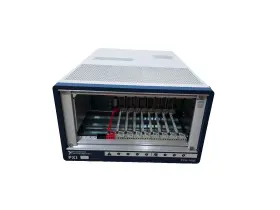

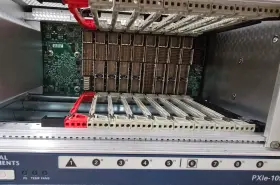
| Brand | NATIONAL INSTRUMENTS |
|---|---|
| Manufacturer Part Number | PXIE-1092 |
| Part Type | INSTRUMENT |
Review NATIONAL INSTRUMENTS Ni Pxie 10-slot Hybrid Slots Pxi Express
Introducing the National Instruments PXIe-1092, a versatile and high-performance 10-slot hybrid PXIe chassis from National Instruments. This chassis is designed to accommodate both PXI and PXI Express (PCIe) modules, offering an ideal solution for flexible and expansive measurement, automation, and test systems.
The PXIe-1092 features a sophisticated backplane architecture that supports signaling speeds up to 16 Gbps, enabling users to integrate the latest high-speed I/O and computing modules into their systems. Additionally, every slot is compatible with both PXI and PXIe modules, providing unmatched flexibility in your system design and future upgrade capabilities.
This 19-inch, 1 RU chassis provides reliable and secure power distribution with a total power budget of 450 W max, ensuring that all modules are adequately powered to maintain optimal performance. The chassis also includes built-in slot-swapping capability, allowing easy installation, maintenance, and update of modules without disrupting the rest of the system.
Standout features of the PXIe-1092 include:1. PXIe and PXI compatibility: Every slot supports both PXI and PXIe modules, providing unparalleled system flexibility in a compact design.
2. High-speed backplane: The latest in backplane technology, featuring signaling speeds up to 16 Gbps, supports connecting the most modern I/O and computing modules.
3. Expansive slot configuration: Ten slots accommodate a variety of different module sizes and types.
4. Reliable power distribution: The 450 W power budget ensures all modules receive the necessary power needed for optimal operation.
5. Slot-swapping capability: Easy removal and replacement of modules without disturbing system operation.
6. Flexible module installation: Cards can be installed in any slot without modifications, giving users the freedom to custom build their ideal systems.
With the National Instruments PXIe-1092, users can design, build, and maintain flexible, modular, and powerful measurement, automation, and test systems to tackle any application across the entire breadth of industries.
PXI systems, including the National Instruments PXIe-1092 and NI PXI 10-slot hybrid chassis, are modular data acquisition (DAQ) and control systems widely used in automation, research, and industrial applications. Herein, I will provide an impartial comparison of the benefits and drawbacks of investing in a PXIe-1092 NI PXI 10-slot hybrid chassis, eventually presenting a conclusion and recommendation.
Pros:1. Data Acquisition Flexibility: PXI systems are well-known for their high-performance and extensive range of peripherals supporting various signal types, from analog and digital I/O to motion control and data acquisition. The use of PXIe-1092 and NI PXI 10-slot hybrid chassis enables users to build custom systems for acquiring, processing, and controlling a wide variety of signals.
2. Scalability: PXI systems offer scalability as they can accommodate multiple modules, simplifying the expansion of projects as requirements change or grow. The 10-slot configuration of the PXIe-1092 hybrid chassis permits users to add more I/O modules, processors, or other required components.
3. High-Performance: PXI systems feature fast data transfer rates, with the PXI Express (PXIe) technology offering significant bandwidth improvements over traditional PXI. These high-performance characteristics make PXI systems a popular choice for various applications, including test and measurement, data logging, control systems, and simulation workflows.
4. Software Support: The extensive library of software tools is another significant advantage of PXI systems. NI LabVIEW, a graphical programming language, is one of the most commonly used software packages for PXI applications, providing a flexible and intuitive approach to data acquisition and processing.
5. Modular Design: PXI systems offer ease-of-use due to their modular nature. The hot-swappable and rugged design makes it possible to swap or upgrade individual modules while the system remains operational, reducing downtime and maintenance requirements.
Cons:1. Cost: The primary disadvantage of PXI systems, like the PXIe-1092 and NI PXI 10-slot hybrid chassis, is their cost. These systems can be significantly more expensive compared to alternative data acquisition platforms due to their high-performance capabilities and versatility.
2. Complexity: As PXI systems pride themselves on their flexibility and versatility, their user interface and hazardous installation processes may be less user-friendly for users with limited technical knowledge. This, in turn, might necessitate seeking the assistance of an experienced professional for system design and implementation.
3. Space Requirements: The compact, modular design of PXI systems allows users to accommodate multiple modules within a single enclosure, but that compactness also implies a larger overall footprint than some alternatives. In those situations where space is a constraint, alternative data acquisition platforms might be preferable.
In conclusion, the PXIe-1092 and NI PXI 10-slot hybrid chassis offer a multitude of benefits such as high-performance, flexibility, scalability, software support, and modular design. However, the costs, complexity, and space requirements might deter some users from choosing PXI systems.
For applications that demand extensive data acquisition capabilities, require scalability, and tolerate the investment and learning curve, PXI systems are an excellent choice. The cutting-edge performance, integration, and ease of use make PXI systems a well-regarded solution in applications spanning from research and development to industrial automation.
In summary, PXI systems, including the PXIe-1092 and NI PXI 10-slot hybrid chassis, can transform the way organizations manage their data acquisition projects, providing excellent long-term benefits overall.
Details:
specifications vpxisyst:
- brand: National Instruments
- mpn: Pxie-1092
- part type: Instrument
seller vpxisyst:
- rating: 100.0%
- city: annapolis, maryland
- # reviews: 1093
shipping vpxisyst:
- type: fixed
- carrier: ups
- class: standard, expedited, one-day
- transit: 3-8 days
- service: ups ground, ups 3 day select, ups 2nd day air, ups next day air saver
payments vpxisyst:
- wallet: paypal
- other
- credit card: mastercard
offer vpxisyst:
- options: ship-to-home
- availability: in stock
- sold #: 27
- in stock #: 5
- prices: $8600.00–$9906.97
- item condition:
- New
- New – Open box
- Used
- started: november 19, 2024
general vpxisyst:
- category: Business & Industrial > Test, Measurement Inspection > Systems > Pxi Vxi Mainframes Chassis
returns vpxisyst:
- time: 30 days
- policy: returns accepted
- paid by: buyer
- method: money back
Similar Items:
- National Instruments Pxie-8375 Ni015 Ni Remote Module Mxi-express X4 Pxi Please see all photos. No signs of physical damage...(December 13th, 2023)
- National Instruments Pxi-8335 Ni Mxi-3 Interface Module This unit will arrive in the condition shown. National Instruments ni PXI-8335 MXI-3 interface module: this lot is for one. Power cords and power adapters are never included unless specifically mentioned. Warranty this item is guaranteed to be as described. Shipping buyer pays for all shipping costs...(December 14th, 2023)
- National Instruments Pxi-8330 1pc Used Ni Mxi-3 186897d-01 Interface Module 1PC used National Instruments ni PXI-8330 MXI-3 186897D-01 interface module. Best price service. Shipping our delivery methods include speedups, DHL, ups, USPS, etc. Item specifics: mpn: PXI-8330, brand: National Instruments...(December 14th, 2023)
- National Instruments Pxi-4462 24-bit 204.8 Ks s Sound And Vibration Module Used Best price service. National Instruments PXI-4462 24-BIT 204.8 ks./s sound and vibration module used. Item specifics: brand: National Instruments, mpn: PXI-4462. Shipping our delivery methods include speedups, DHL, ups, USPS, etc...(December 15th, 2023)
- National Instruments Crio-9002 1pc Used Ni Controller Best price service. Item specifics: brand: National Instruments, mpn: CRIO-9002. Shipping our delivery methods include speedups, DHL, ups, USPS, etc. 1PC used National Instruments ni CRIO-9002 controller...(December 15th, 2023)
- National Instruments Pxi-8430 1pc Used Rs232 Module 1PC used National Instruments PXI-8430 RS232 module. Shipping our delivery methods include speedups, DHL, ups, USPS, etc. Item specifics: mpn: PXI-8430, brand: National Instruments. Best price service...(December 15th, 2023)
- National Instruments Pxie-8360 Ni Mxi-express Used Item specifics: brand: National Instruments, mpn: PXIE-8360. National Instruments ni PXIE-8360 mix-express used. Shipping our delivery methods include speedups, DHL, ups, USPS, etc. Best price service...(December 15th, 2023)
- National Instruments 191373g-01 Pxi-8360 Mxi Express Interface Card Used National Instruments PXI-8360 mix express interface card 191373G-01 used. Shipping our delivery methods include speedups, DHL, ups, USPS, etc. Best price service. Item specifics: mpn: PXI-8360, brand: National Instruments...(December 15th, 2023)
- National Instruments Pxie-1071 Ni Chassis Used National Instruments ni PXIE-1071 chassis used. Best price service. Shipping our delivery methods include speedups, DHL, ups, USPS, etc. Item specifics: brand: National Instruments, mpn: PXIE-1071...(December 15th, 2023)
- National Instruments Scxi-1042q Ni Pxi-1042q 8 Slot Chassis Tjd67 No accessories including standard power cord/cable. Acquired from a reliable source. No means to test. Some cosmetic wear. High cost, high value equipment for a fraction of the new /replacement price. Powers up!: 1.: .: comes as shown. Used items have a 30-DAY return...(December 15th, 2023)
- National Instruments Pxie-8840 Pxi Embedded Controller With 320gb Hdd And Windows Os The outer Sm can be used to pass trigger and timing signals into out of the pxi bus in a framework. This model has an intel I5-4400E processor, 2 gigabit Ethernet with USB ports, 4/2 .0 express card optional, RS-232 serial in-ROM memory, and hard drive diagnostics. The ni PXIE-8840 quad-core ...(December 15th, 2023)