- PXI & VXI Systems On Sale
- sku: 853454825585622
- NATIONAL PXI-6682H
PXI-6682H NATIONAL INSTRUMENTS Ni Timing Synchronization
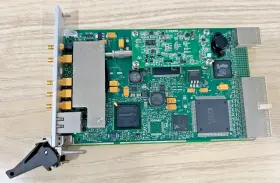
| Brand | NATIONAL INSTRUMENTS |
|---|---|
| Manufacturer Part Number | PXI-6682H |
| Part Type | TIMING INSTRUMENT MODULE |
Review NATIONAL INSTRUMENTS Ni Timing And Synchronization Module
The National Instruments PCIe-6682H PXI Timing Synchronization Module, model number 188887A-01L, is a high-performance, compact PXI Express (PXIe) module designed for precise time synchronization and coordinated measurement applications. This module can help streamline data acquisition systems and simplify timing synchronization in various testing, data acquisition, and automation scenarios.
Key Features:1. Synchronization: The PCIe-6682H module offers excellent synchronization accuracy for applications requiring precise timing, with an onboard oven-controlled crystal oscillator (OCXO) that ensures an excellent short-term stability of 10 ppb. It supports multiple synchronization standards such as 10 MHz IEEE 1588 Precision Time Protocol (PTP), Synchronous Ethernet, and IRIG-BTheta, making it versatile for various applications.
2. Flexibility: This module can provide synchronization to multiple slaves over Ethernet or synchronization channels, enabling the alignment of data streams in coordinated measurement systems. It features a precision-controlled output that supports both 10 MHz and 50 ohms terminated 100 MHz differential inputs. This flexibility offers a wide range of applications, from lab environments to demanding industrial applications.
3. High-Speed I/O: The National Instruments PCIe-6682H module provides 2 high-speed National Instruments NI-X series digitizer channels that can acquire signals up to 1 GSA/s (4-wire differential, 500 MHz single-ended) per channel with an analog input range of 2.5 V. These high-speed channels allow fast capture of transient signals and offer excellent dynamic accuracy, delivering critical information for a wide range of applications.
4. Durability: This PXI Express module is ruggedly designed and built to withstand demanding industrial environments with operating temperatures ranging from -40 C to 65 C. Its use of PXI Express technology ensures robust data transfer and low latency, making it a reliable solution for applications where timing synchronization is essential.
5. Easy Integration: The PCIe-6682H module is easily integrated into both NI and third-party control software, including NI LabVIEW, MeasuredIO, and XajaxacsPXI. It is also compatible with NI-Sync and NI-max, synchronization software from National Instruments, which simplifies the synchronization process, ensuring a seamless workflow for users.
The National Instruments PXI-6682H timing synchronization module model 188887A-01L is designed for applications requiring accurate and precise time synchronization in a PXI (PXI Express) system. Here are some pros and cons of purchasing this module for your specific application:
Pros:1. High accuracy: The National Instruments PXI-6682H timing synchronization module offers an excellent level of accuracy, with a maximum frequency uncertainty of just 1 ns and a phase noise of less than -80 dBc/Hz at 1 MHz offset. This level of accuracy is ideal for applications that require synchronization of multiple signals with high precision.
2. Versatility: The module supports various synchronization protocols, including IEEE 1588 Precision Time Protocol (PTP) andix2b Synchronous Ethernet. This versatility makes it a suitable choice for a wide range of applications and allows compatibility with other time synchronization systems.
3. Integration with existing systems: The module is designed to fit easily into PXI systems, which are widely used in various industries, such as automotive, aerospace, and test and measurement. This integration enables easy implementation and compatibility with existing systems, reducing setup time and effort.
4. Rugged design: National Instruments' PXI-6682H timing synchronization module is designed for harsh conditions, with a temperature range of -40 C to 70 C and an operating shock range of 10 g. This rugged design makes it suitable for use in industrial environments where temperature and shock may be significant concerns.
5. Efficient clock distribution: The module can distribute signals to multiple devices, making it ideal for applications where synchronization is required across several channels. It also uses a dedicated clock distribution architecture to eliminate crosstalk and ensure clean signal transmission.
Cons:1. Cost: The National Instruments PXI-6682H timing synchronization module is a high-performance and feature-rich module, which comes with a premium price tag. Depending on the specific application and the number of channels required, the cost of this module might be prohibitive for some users.
2. Complexity: Implementing and configuring a timing synchronization system, such as the PXI-6682H module, can be a complex task. Users will need to be familiar with the PXI system architecture and the synchronization protocols supported by the module to ensure proper setup and operation.
3. Power consumption: The module has a relatively high power consumption, drawing 14.6 W under full load. While this power consumption is necessary to achieve the module's high-performance characteristics, it might be a concern for users with limited power budgets or where power is at a premium.
4. Limited timing ranges: Although the module offers high accuracy, it can only support timing ranges between -1 ms and 5 ms. Applications requiring longer timing ranges might need to explore other synchronization methods or consider alternative modules.
Conclusion:The National Instruments PXI-6682H timing synchronization module offers several benefits, such as high accuracy, versatility, ruggedness, efficient clock distribution, and compatibility with various synchronization protocols. However, it also comes with some drawbacks, such as a premium cost, complexity in implementation, higher power consumption, and limited timing ranges.
Recommendation:If your application requires highly precise synchronization of signals and fits well within the supported timing range, the National Instruments PXI-6682H timing synchronization module is a solid choice for your PXI system. For applications with more relaxed timing requirements, lower budgets, or longer timing ranges, you might consider alternative solutions or assess other timing synchronization modules from various manufacturers to find a more suitable option. Ultimately, carefully assessing your requirements and constraints will help you make an informed decision on the right module for your application.
Details:
specifications vpxisyst:
- brand: National Instruments
- mpn: Pxi-6682h
- part type: Timing Instrument Module
returns vpxisyst:
- policy: no returns
payments vpxisyst:
- wallet: google-pay
- other
- credit card: diners-club
general vpxisyst:
- category: Business & Industrial > Test, Measurement Inspection > Systems > Pxi Vxi Mainframes Chassis
shipping vpxisyst:
- class: standard
- carrier: ups
- transit: 4-8 days
- service: ups ground
- type: fixed
offer vpxisyst:
- prices: $899.99–$2000.00
- item condition:
- New
- Used
- options: ship-to-home
- started: february 6, 2025
- in stock #: 5
- best offers: true
- availability: in stock
- sold #: 24
seller vpxisyst:
- rating: 98.5%
- city: columbus, ohio
- # reviews: 1659
Similar Items:
- National Instruments Pxie-8375 Ni015 Ni Remote Module Mxi-express X4 Pxi Please see all photos. No signs of physical damage...(December 13th, 2023)
- National Instruments Pxi-8335 Ni Mxi-3 Interface Module This unit will arrive in the condition shown. National Instruments ni PXI-8335 MXI-3 interface module: this lot is for one. Power cords and power adapters are never included unless specifically mentioned. Warranty this item is guaranteed to be as described. Shipping buyer pays for all shipping costs...(December 14th, 2023)
- National Instruments Pxi-8330 1pc Used Ni Mxi-3 186897d-01 Interface Module 1PC used National Instruments ni PXI-8330 MXI-3 186897D-01 interface module. Best price service. Shipping our delivery methods include speedups, DHL, ups, USPS, etc. Item specifics: mpn: PXI-8330, brand: National Instruments...(December 14th, 2023)
- National Instruments Pxi-4462 24-bit 204.8 Ks s Sound And Vibration Module Used Best price service. National Instruments PXI-4462 24-BIT 204.8 ks./s sound and vibration module used. Item specifics: brand: National Instruments, mpn: PXI-4462. Shipping our delivery methods include speedups, DHL, ups, USPS, etc...(December 15th, 2023)
- National Instruments Crio-9002 1pc Used Ni Controller Best price service. Item specifics: brand: National Instruments, mpn: CRIO-9002. Shipping our delivery methods include speedups, DHL, ups, USPS, etc. 1PC used National Instruments ni CRIO-9002 controller...(December 15th, 2023)
- National Instruments Pxi-8430 1pc Used Rs232 Module 1PC used National Instruments PXI-8430 RS232 module. Shipping our delivery methods include speedups, DHL, ups, USPS, etc. Item specifics: mpn: PXI-8430, brand: National Instruments. Best price service...(December 15th, 2023)
- National Instruments Pxie-8360 Ni Mxi-express Used Item specifics: brand: National Instruments, mpn: PXIE-8360. National Instruments ni PXIE-8360 mix-express used. Shipping our delivery methods include speedups, DHL, ups, USPS, etc. Best price service...(December 15th, 2023)
- National Instruments 191373g-01 Pxi-8360 Mxi Express Interface Card Used National Instruments PXI-8360 mix express interface card 191373G-01 used. Shipping our delivery methods include speedups, DHL, ups, USPS, etc. Best price service. Item specifics: mpn: PXI-8360, brand: National Instruments...(December 15th, 2023)
- National Instruments Pxie-1071 Ni Chassis Used National Instruments ni PXIE-1071 chassis used. Best price service. Shipping our delivery methods include speedups, DHL, ups, USPS, etc. Item specifics: brand: National Instruments, mpn: PXIE-1071...(December 15th, 2023)
- National Instruments Scxi-1042q Ni Pxi-1042q 8 Slot Chassis Tjd67 No accessories including standard power cord/cable. Acquired from a reliable source. No means to test. Some cosmetic wear. High cost, high value equipment for a fraction of the new /replacement price. Powers up!: 1.: .: comes as shown. Used items have a 30-DAY return...(December 15th, 2023)
- National Instruments Pxie-8840 Pxi Embedded Controller With 320gb Hdd And Windows Os The outer Sm can be used to pass trigger and timing signals into out of the pxi bus in a framework. This model has an intel I5-4400E processor, 2 gigabit Ethernet with USB ports, 4/2 .0 express card optional, RS-232 serial in-ROM memory, and hard drive diagnostics. The ni PXIE-8840 quad-core ...(December 15th, 2023)