- PXI & VXI Systems On Sale
- sku: 1263643324920881
- ESEC 931.050/3
931.050-3 ESEC Board
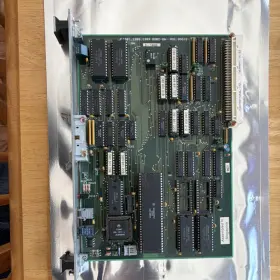
| Brand | ESEC |
|---|---|
| Manufacturer Part Number | 931.050/3 |
| Part Type | BOARD |
| Module Function | ADDRESS MODULE |
Review ESEC 931.050/3 Board
The ESEC 931.050/3 board is a versatile and high-performance automotive electronic control unit (ECU) designed for various applications, particularly in the field of engine management systems. This ECU board, manufactured by ESEC S.p.A., an Italian company renowned for its expertise in automotive electronics, boasts advanced features and capabilities that make it an excellent choice for modern vehicle applications.
The ESEC 931.050/3 board is based on a state-of-the-art 16-bit RISC microcontroller and comes with an integrated powertrain interface, enabling seamless communication with various sensors and actuators. This ECU board supports multiple input/output channels, including analog and digital inputs, as well as PWM and pulse input/output channels. This extensive connectivity ensures that it can effectively manage complex engine control systems, including fuel injection, ignition timing, and exhaust gas recirculation.
One of the notable features of the ESEC 931.050/3 board is its built-in diagnostic capabilities. This ECU is equipped with a self-diagnostic system that can detect and troubleshoot faults within the engine control system, allowing for quick and efficient repairs. Furthermore, it supports OBD-II (On-Board Diagnostics, Second Generation) communication protocols, which makes it compatible with various diagnostic tools used in the automotive industry.
The ESEC 931.050/3 board also comes with a robust and flexible programming environment. It is compatible with ESEC's proprietary software tool, called ESEC-Auto, which allows users to develop, test, and optimize engine control strategies using a graphical user interface. This software provides a wide range of features, including data logging, real-time analysis, and parameter tuning, making it an invaluable tool for engineers and technicians working on advanced engine management systems.
Another key advantage of the ESEC 931.050/3 board is its high level of integration and customization. It offers a modular design, which allows users to easily add or remove functionality based on their specific requirements. Additionally, it supports user-defined functions and customizable algorithms, enabling users to tailor the ECU's behavior to their unique applications.
The ESEC 931.050/3 board is designed to meet the stringent requirements of the automotive industry, particularly in terms of safety, reliability, and durability. It is compliant with various automotive standards, including ISO 14229, ISO 15765, and ISO 26262, ensuring that it meets the highest levels of functional safety and reliability.
In summary, the ESEC 931.050/3 board is a powerful and versatile automotive ECU designed for advanced engine management applications. Its extensive connectivity, built-in diagnostic capabilities, flexible programming environment, and high level of integration make it an excellent choice for engineers and technicians working in the automotive industry. Additionally, its compliance with various automotive standards ensures that it meets the stringent safety, reliability, and durability requirements of the industry.
The ESEC 931.050/3 board is a microcontroller unit (MCU) used in automotive applications. Here are some pros and cons of buying this MCU: Pros:1. High Performance: The ESEC 931.050/3 MCU offers a high level of processing power, making it suitable for complex automotive applications. It features a 16-bit RISC processor with a maximum clock speed of 40 MHz and a large memory capacity (up to 16 KB Flash and 256 KB SRAM).
2. Safety Features: This MCU is designed to meet the safety requirements of the automotive industry. It includes features such as watchdog timers, power-on self-test (POST), and error detection and correction capabilities.
3. Integrated Peripherals: The ESEC 931.050/3 MCU offers a wide range of integrated peripherals, including timers, communication interfaces (CAN, LIN, and SPI), and analog input channels.
4. Low Power Consumption: This MCU is designed to minimize power consumption, making it suitable for applications where battery life is a concern. It features power-saving modes and can be configured to operate at low clock speeds when not in use.
Cons:1. Expensive: The ESEC 931.050/3 MCU is more expensive than some other MCUs on the market due to its high performance and safety features.
2. Complex Development Environment: Developing applications for this MCU can be complex due to its large memory capacity and integrated peripherals. It requires a specialized development environment and a good understanding of the automotive industry.
3. Limited Availability: This MCU may not be readily available from all distributors, and it may require a longer lead time for delivery.
Conclusion:The ESEC 931.050/3 MCU is a high-performance and feature-rich microcontroller unit designed specifically for automotive applications. Its safety features, integrated peripherals, and low power consumption make it an excellent choice for complex automotive systems. However, its high cost, complex development environment, and limited availability may make it a less attractive option for some applications.
Recommendation:If you require a high-performance and safety-critical microcontroller unit for automotive applications, the ESEC 931.050/3 MCU is a good choice. However, if you are working on a budget or have less complex requirements, there may be other MCUs on the market that offer similar features at a lower cost. It is important to carefully consider your application requirements and development resources before making a purchase.
Details:
This board was removed from a working machine.
specifications vpxisyst:
- brand: Esec
- mpn: 931.050/3
- part type: Board
- module function: Address Module
returns vpxisyst:
- policy: no returns
offer vpxisyst:
- sold #: 11
- options: ship-to-home
- in stock #: 5
- best offers: true
- availability: in stock
- prices: $89.67–$233.36
- item condition: Used
- started: february 5, 2026
shipping vpxisyst:
- type: calculated
- service: ups ground
- class: standard
- carrier: ups
- transit: 4-9 days
seller vpxisyst:
- # reviews: 437
- city: garnet valley, pennsylvania
- rating: 0.0%
payments vpxisyst:
- wallet: apple-pay
- credit card: discover
- other
- money order
general vpxisyst:
- category: Business & Industrial > Test, Measurement Inspection > Systems > Pxi Vxi Boards Modules